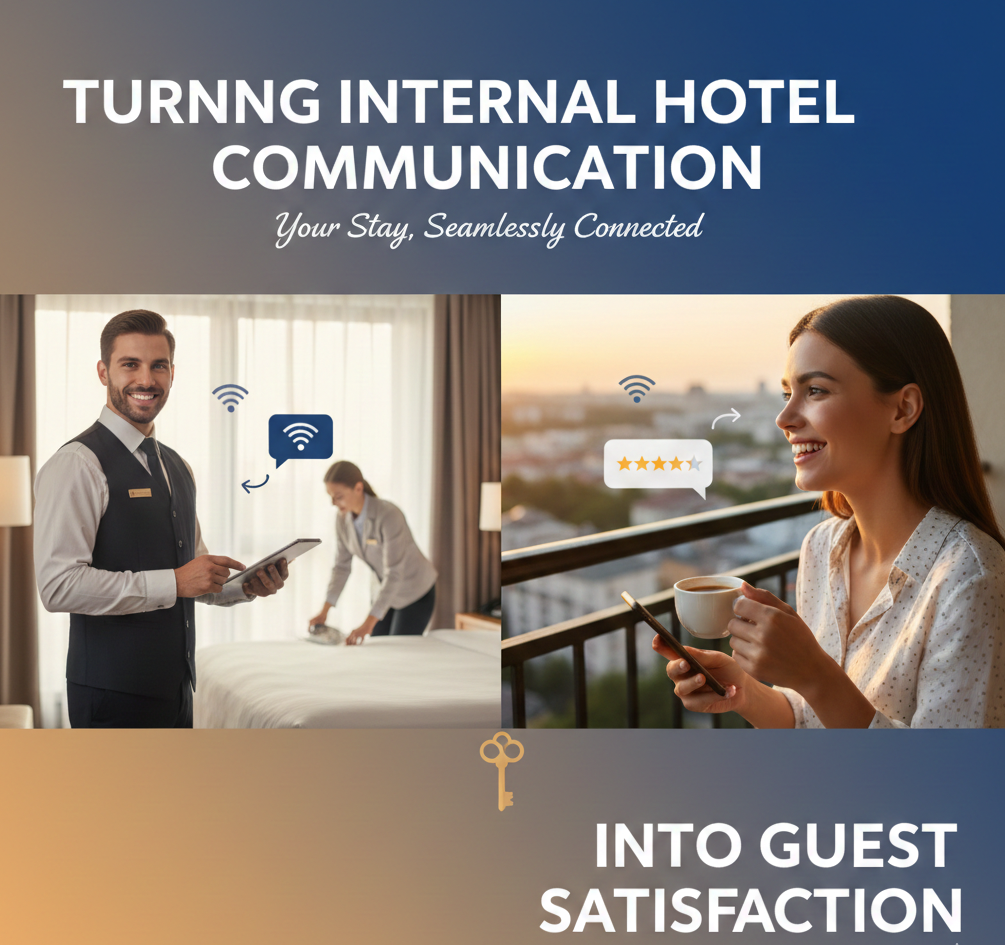
Turning Internal Hotel Communication Into Guest Satisfaction
Introduction
In the fast-paced hospitality industry, seamless internal communication is not just an operational requirement — it’s the backbone of exceptional guest experiences. Every guest interaction, from a warm welcome at check-in to a quick response to a room service request, relies on how well the hotel’s internal teams communicate and coordinate.
Yet, in many hotels, traditional communication methods — handwritten notes, verbal reminders, and manual task tracking — often lead to confusion, delays, and missed service opportunities. That’s where digital transformation steps in. A Hotel Operations Companion Tool or Hotel Staff Management Tool can revolutionize how information flows across teams, turning everyday staff chat into consistent guest cheer.
Challenges of Traditional Staff Communication
The hospitality industry has always been people-driven. But even the most dedicated team can struggle when communication systems fail. Let’s explore the common challenges faced by hotels that still rely on outdated communication methods.
Manual Logs and Notes
Many hotels still use manual logbooks or paper notes to record daily tasks, maintenance issues, or guest requests. While this approach might seem convenient, it often creates more problems than it solves:
- Information Gaps: Paper logs can be misplaced or forgotten.
- Delayed Updates: Managers or other departments may not get real-time updates.
- Limited Accountability: It’s difficult to track who handled what and when.
In the age of instant communication, relying on handwritten notes means running the risk of service errors and missed opportunities.
Missed Task Updates
A hotel functions like a well-orchestrated symphony — housekeeping, front desk, maintenance, and food & beverage teams must operate in perfect harmony. But without a proper system, task updates can easily slip through the cracks:
- A maintenance request might go unresolved because the note didn’t reach the engineer.
- Housekeeping might prepare a room late because they weren’t informed it’s ready for cleaning.
- The front desk might give inaccurate information to a guest because they didn’t receive an update.
These communication gaps directly impact guest satisfaction — leading to complaints, poor reviews, and even loss of repeat business.
Misalignment Across Departments
Every department in a hotel is interdependent. But without a centralized communication platform, departments can often work in silos:
- The Front Office doesn’t know the housekeeping status.
- Maintenance isn’t updated about urgent issues.
- Food & Beverage staff miss event schedule changes.
This misalignment leads to confusion, delays, and inefficiencies — all of which affect the guest experience. To achieve operational excellence, hotels must bridge these departmental divides with a reliable Hotel Workflow Management System.
How Digital Tools Improve Staff Communication
.jpg)
The good news? Hotels no longer have to struggle with outdated systems. The rise of Hotel Operations Software and Hotel Staff Management Tools has changed the game. These digital platforms offer a smarter, faster, and more transparent way to manage communication and operations.
Hotel Operations Companion Apps
A Hotel Operations Companion Tool acts as a centralized hub where all internal communication happens in real-time. From assigning tasks to sharing updates and reporting issues, everything is accessible with just a few taps.
Key Benefits:
- Instant Task Assignment: Managers can assign and monitor staff duties instantly.
- Real-Time Updates: Everyone stays informed about ongoing tasks.
- Centralized Communication: No more switching between notes, calls, and messages.
- Data-Driven Insights: Managers can analyze trends to improve efficiency.
These tools empower every staff member — from front desk agents to room attendants — to stay aligned and responsive.
Mobile Notifications and Alerts
Mobile technology has become an integral part of hotel operations. With Hotel Operations Management Software, staff receive instant notifications for task updates, maintenance requests, or special guest needs.
For example:
- If a guest reports a broken air conditioner, the maintenance team gets an immediate alert.
- Once fixed, the system automatically updates the front desk and housekeeping.
- The manager gets notified when the task is completed.
This digital loop ensures zero communication lag and keeps the guest’s needs at the forefront.
Departmental Collaboration Dashboards
Modern Hotel Workflow Management Systems feature dashboards that visualize all ongoing operations — from room cleaning status to pending maintenance tasks. These dashboards provide a bird’s-eye view of hotel activities and allow department heads to coordinate efficiently.
Advantages include:
- Transparent visibility of all tasks.
- Real-time collaboration across departments.
- Prioritization of guest-related issues.
- Streamlined workflows for improved productivity.
Digital dashboards eliminate the traditional communication chaos, ensuring every department is aligned with hotel-wide objectives.
Impact on Guest Experience
Improving internal communication doesn’t just make operations smoother — it directly enhances guest satisfaction. After all, when your team communicates effectively, guests receive faster, more consistent, and higher-quality service.
Faster Service Delivery
Speed matters in hospitality. Whether it’s delivering fresh towels or resolving a room issue, timely service defines the guest experience.
With digital communication tools:
- Staff can report and resolve issues immediately.
- Managers can track task completion in real-time.
- Guests receive faster responses and resolutions.
This speed and responsiveness make guests feel valued and cared for — a crucial factor in winning positive reviews and repeat visits.
Error Reduction
Miscommunication is one of the leading causes of service errors. But digital tools minimize human error by providing automated task tracking and clear digital records.
- No lost notes or forgotten tasks.
- Clear accountability and digital logs.
- System reminders prevent missed follow-ups.
With fewer mistakes, your team delivers consistently high service quality — boosting both guest trust and operational confidence.
Smoother Check-In/Check-Out Processes
Few moments shape a guest’s impression more than check-in and check-out. Smooth transitions here depend heavily on internal coordination. A Hotel Staff Management Tool ensures that:
- Rooms are marked “ready” in real-time once housekeeping finishes.
- Front desk receives live updates to avoid delays.
- Guest preferences (like late check-out) are visible to all departments.
The result? A seamless experience where guests feel that every detail is handled effortlessly.
Best Practices for Internal Communication
Having digital tools is just the beginning. To unlock their full potential, hotels must also cultivate strong communication practices that align with operational goals.
Daily Briefings vs Digital Updates
Traditional daily briefings are still valuable for setting the day’s priorities, but combining them with digital updates ensures no information is lost afterward.
Best Practice:
- Conduct short morning briefings to align teams.
- Use your Hotel Operations Software to share ongoing updates throughout the day.
- Encourage staff to log all key actions in the system rather than relying on verbal messages.
This hybrid approach merges human connection with digital efficiency.
Staff Accountability and Task Ownership
Effective internal communication also means every team member takes ownership of their responsibilities. Digital tools make this easier by providing transparent task tracking.
Implementation Tips:
- Assign clear roles and responsibilities.
- Encourage real-time task completion updates.
- Use the system to acknowledge and reward consistent performance.
When staff know their work is visible and valued, motivation and accountability naturally improve.
Monitoring Metrics for Service Excellence
Finally, data is the hidden gem of digital communication. A Hotel Operations Management Software records every action — from task completion times to guest request trends. By analyzing these metrics, hotels can identify areas for improvement.
Key Metrics to Track:
- Average response time to guest requests.
- Maintenance issue resolution rate.
- Housekeeping turnaround times.
- Inter-departmental communication lag.
Continuous monitoring helps management make informed decisions that elevate both staff performance and guest satisfaction.
Do’s and Don’ts of Internal Hotel Communication
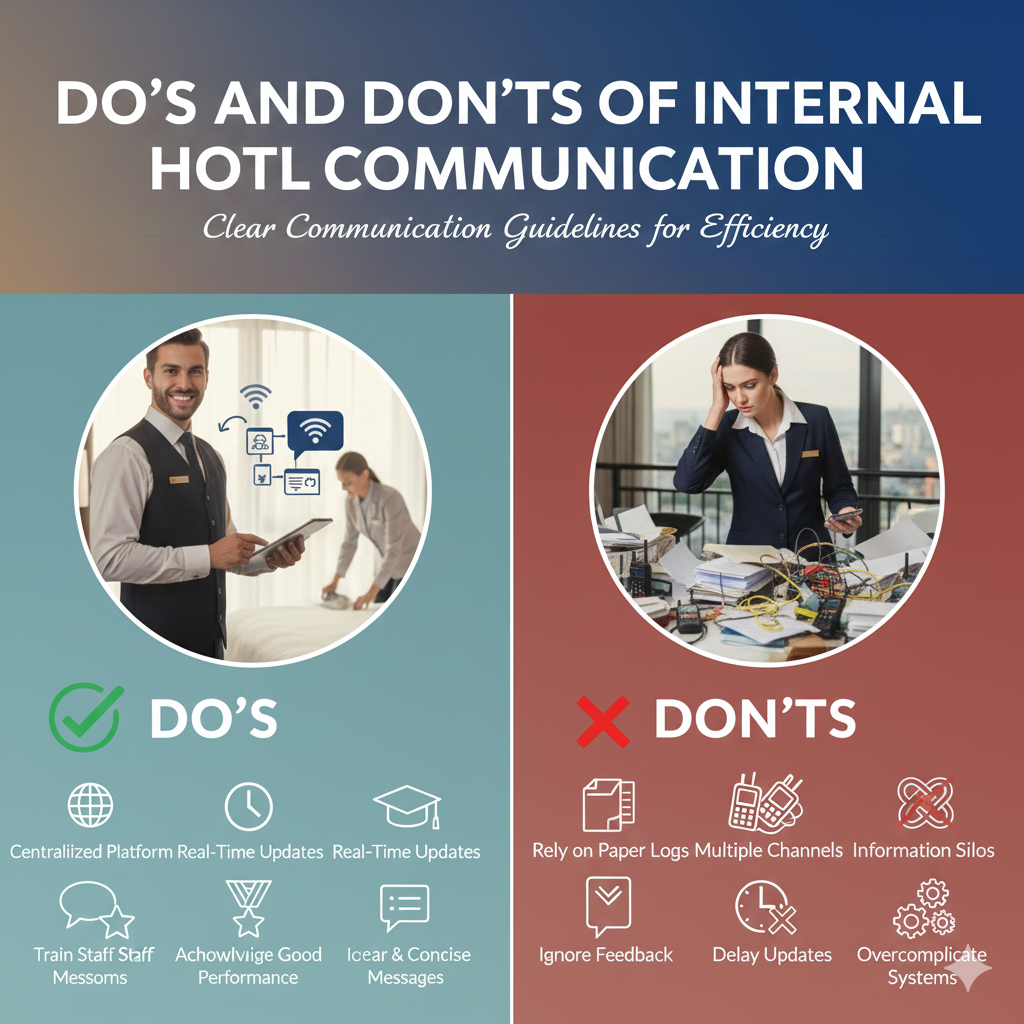
Clear communication guidelines keep your operations consistent and efficient.
Do’s ✅
- Use a Centralized Platform: Keep all communication within one system for clarity.
- Encourage Real-Time Updates: The faster information flows, the better decisions you make.
- Train Staff Regularly: Ensure everyone knows how to use your digital tools efficiently.
- Acknowledge Good Performance: Motivate your team through recognition.
- Keep Messages Clear and Concise: Avoid confusion by using simple, action-oriented communication.
Don’ts ❌
- Don’t Rely on Paper Logs: They’re outdated, inefficient, and error-prone.
- Don’t Use Multiple Communication Channels: It fragments information.
- Don’t Ignore Feedback: Staff input is valuable for continuous improvement.
- Don’t Delay Updates: Delayed information leads to delayed service.
- Don’t Overcomplicate Systems: Simplicity and usability are key to success.
Conclusion
In today’s hospitality landscape, communication is no longer just about coordination — it’s about creating memorable guest experiences through teamwork, technology, and transparency.
By embracing tools like the Hotel Staff Management Tool, Hotel Operations Companion Tool, and Hotel Workflow Management System, hotels can transform their internal communication into a strategic advantage.
When staff communicate better, guests feel the difference — faster service, fewer errors, and a smoother stay from check-in to check-out.
In essence, turning internal communication into guest satisfaction isn’t just a process — it’s a promise of excellence delivered through every interaction, powered by innovation and teamwork.
Frequently Asked Questions (FAQ)
Q1: What is a Hotel Staff Management Tool?
A Hotel Staff Management Tool is a digital platform designed to streamline communication, assign tasks, and track performance among hotel employees. It improves operational efficiency and enhances guest service.
Q2: How does internal communication affect guest satisfaction?
When hotel staff communicate efficiently, service delivery becomes faster and more accurate — directly improving guest satisfaction and loyalty.
Q3: Is digital communication expensive to implement?
Not necessarily. Many Hotel Operations Software options are scalable and affordable. In fact, they often reduce costs by saving time and preventing service errors.
Q4: How can hotels train staff to use new tools?
Hotels should conduct short onboarding sessions, offer video tutorials, and appoint internal “champions” who can assist others in using the system effectively.
Q5: Can digital communication tools integrate with other hotel systems?
Yes, most modern Hotel Workflow Management Systems can integrate with PMS (Property Management Systems), POS, and CRM platforms for a fully connected ecosystem.