Room Turnover vs. Guest Experience: Why Speed and Accuracy Both Matter in Hotel Operations
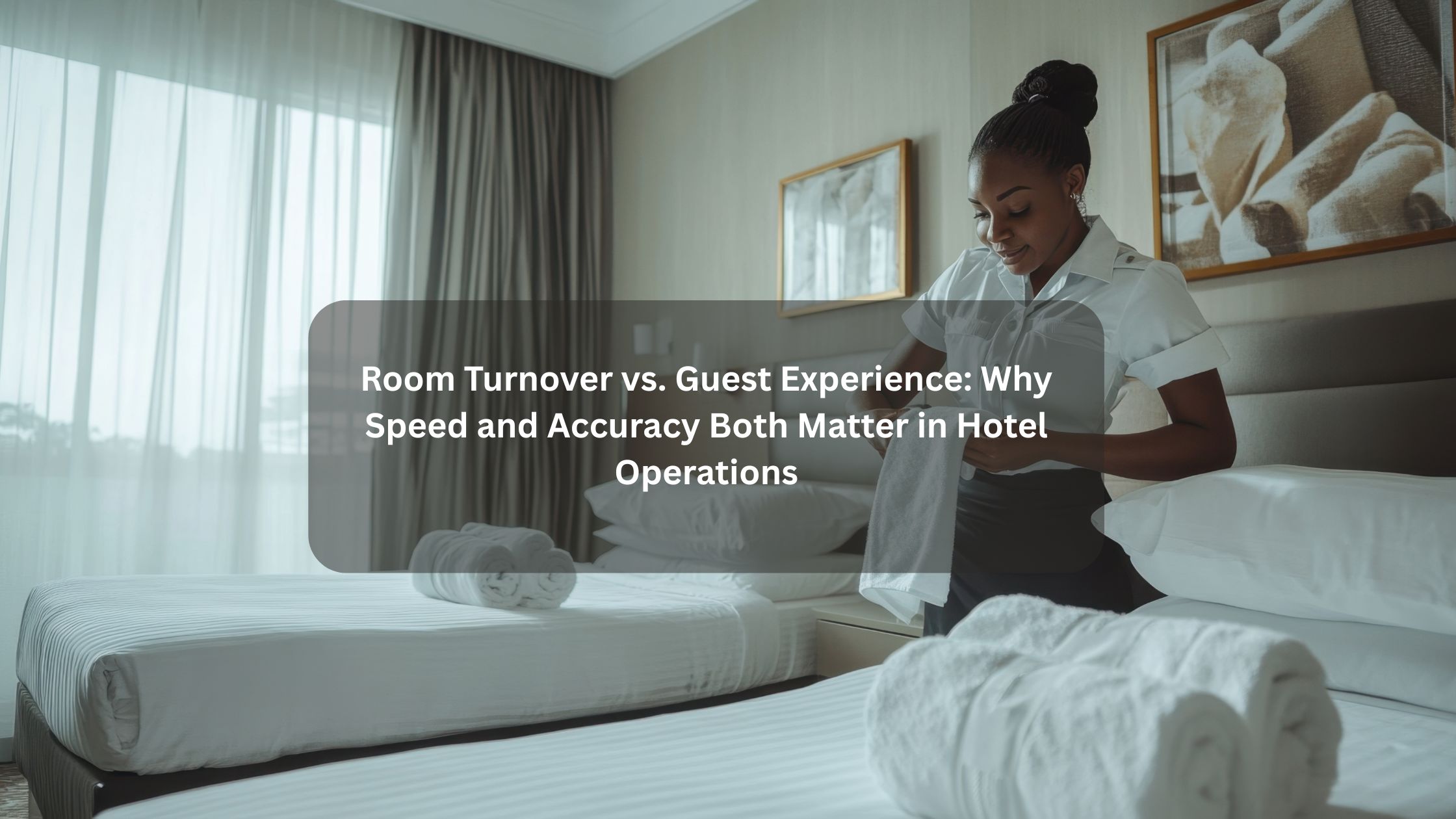
In the fast-paced world of hospitality, a few minutes can make a world of difference. Every hotelier knows that the time between a guest checking out and the next one checking in — the room turnover time — directly affects guest satisfaction, operational efficiency, and revenue.
However, the challenge isn't just speed. It's about balancing speed and accuracy. A spotless, ready room delivered fast creates a strong first impression. A rushed, overlooked detail can turn into a bad review.
This is where Hotel Operations Software and modern Hotel Operations Companion Tools play a critical role — helping hotels achieve precision, coordination, and consistency across teams.
Let's explore how optimizing room turnover impacts the guest experience and why technology is redefining operational excellence for hotels in 2025.
Why Room Readiness Is Critical to Guest Satisfaction
Imagine a guest who's just arrived after a long journey. They're tired, eager to relax — and the front desk informs them that their room isn't ready yet. Even if it's just a 15-minute delay, it immediately affects their perception of your hotel.
Room readiness is more than housekeeping efficiency — it's about how prepared your property is to deliver a flawless guest experience.
A clean, well-prepared room communicates reliability, attention to detail, and respect for the guest's time. Conversely, delays, missing amenities, or overlooked cleaning spots tell guests that operations are disorganized or understaffed.
With rising guest expectations and online reviews influencing bookings, even small operational delays can have lasting consequences.
Key reasons why room readiness impacts guest satisfaction:
- First impressions last: A clean, ready room sets the tone for the entire stay.
- Reduced complaints: Quick turnovers mean fewer waiting guests and less pressure on the front desk.
- Higher ratings: Guests equate efficiency with professionalism, often reflecting it in online reviews.
- Repeat business: Smooth operations encourage guests to return and recommend your property.
In short, room readiness isn't just an operational goal — it's a reputation builder.
The Risks of Delayed Housekeeping
When housekeeping falls behind, it triggers a ripple effect across every department.
The front desk struggles to assign rooms. The maintenance team misses timely repairs. The guest experience suffers — and so does your brand reputation.
Some of the biggest risks associated with delayed housekeeping include:
- Guest dissatisfaction: Delayed check-ins and visible clutter create frustration.
- Revenue loss: When rooms aren't ready, you can't sell them — resulting in lost revenue opportunities.
- Operational bottlenecks: Staff end up working in a reactive mode, constantly chasing updates.
- Communication breakdowns: Without real-time coordination between housekeeping, front desk, and maintenance, small issues snowball into big ones.
- Negative reviews: Guests often take to social media or OTAs to share their experiences, influencing future bookings.
The truth is, most PMS systems (Property Management Systems) were built for reservations, billing, and record-keeping — not for daily operational coordination.
That's why hotels are increasingly adopting a hotel PMS companion tool or hotel operations companion tool — designed to bridge this critical gap.
Balancing Speed with Quality

Speed without quality leads to mistakes. Quality without speed leads to delays.
The sweet spot lies in balancing both — ensuring that each room is turned over quickly and thoroughly.
Traditionally, hotels rely on manual checklists, phone calls, or WhatsApp messages for task updates. This process is time-consuming, error-prone, and hard to track.
With a Hotel Workflow Management System, every task — from room cleaning to linen replacement — is digitized, tracked, and updated in real-time. Supervisors can instantly view progress, assign priorities, and monitor the quality of work.
This kind of structured workflow ensures:
- Faster turnovers: Real-time task allocation avoids idle time.
- Consistent quality: Every room follows a predefined checklist.
- Accountability: Staff performance is trackable and measurable.
- Transparency: The front desk knows exactly which rooms are ready.
By blending automation with human precision, hotels can maintain the perfect balance — delivering spotless rooms without compromising on speed.
How Hotel Operations Companion Tools Optimize Turnover
Technology is revolutionizing hotel operations — and room turnover is at the heart of this transformation.
Unlike PMS platforms, which focus on reservations and billing, Hotel Operations Platforms are purpose-built for operational excellence. They streamline internal communication, automate workflows, and ensure that everyone — from housekeeping to the front desk — works in sync.
Let's explore how these tools make a difference.
Real-Time Updates for Front Desk
In most hotels, the front desk is the communication hub — but often, it's also the bottleneck.
Without visibility into housekeeping progress, front-desk agents constantly call or message for updates. This wastes time, frustrates staff, and leads to miscommunication.
With a Hotel Operations Companion Tool, the front desk gets live updates as soon as a room is cleaned, inspected, or marked ready.
Here's how it helps:
- Instantly view the room's cleaning status on the dashboard.
- Eliminate manual calls or logbooks.
- Offer faster check-ins for waiting guests.
- Prevent double-booking or wrong room assignment errors.
Real-time visibility empowers front-desk staff to make informed decisions, improving both operational flow and guest satisfaction.
Task Assignment for Housekeeping
Housekeeping teams are the backbone of any hotel, but they often struggle with unclear priorities or communication gaps.
A Hotel Workflow Management System or Hotel Operations Software automates task assignments — allocating rooms based on readiness, urgency, and staff availability.
This ensures:
- Fair workload distribution: No staff member is overburdened.
- Priority management: Urgent rooms are cleaned first.
- Progress tracking: Supervisors can monitor completion rates in real-time.
- Accountability: Digital logs record who cleaned which room and when.
By digitizing task assignment, hotels can reduce human error, save hours of coordination time, and achieve near-perfect accuracy in daily operations.
Do's and Don'ts for Efficient Room Turnovers
Do's:
Use a centralized Hotel Operations Platform to manage tasks and updates.
Train staff regularly to maintain cleaning consistency and attention to detail.
Set realistic cleaning standards with time benchmarks for each room type.
Encourage interdepartmental communication between the front desk and housekeeping.
Use data analytics from your Hotel Operations Software to identify bottlenecks.
Don'ts:
Don't rely solely on manual reporting or paper checklists.
Don't overload staff with unrealistic targets — it compromises quality.
Don't delay feedback; continuous performance tracking boosts motivation.
Don't ignore guest feedback — it's a goldmine for improvement.
Don't assume your PMS can handle all operational workflows — it wasn't designed for that.
Conclusion: Faster, Cleaner, Happier Guests

At the end of the day, a guest's experience begins the moment they step into their room. When it's clean, fresh, and ready on time, it creates instant satisfaction and trust.
By leveraging technology like a hotel PMS companion tool or hotel operations companion tool, hoteliers can seamlessly coordinate teams, minimize delays, and ensure every guest enjoys a spotless start to their stay.
A Hotel Operations Platform is not just a tool — it's an operational partner that empowers your staff, enhances accountability, and ensures that speed and accuracy go hand in hand.
In a world where guest expectations are rising faster than ever, the hotels that succeed will be the ones that operate smarter, not just faster.
FAQs
1. What is a Hotel Operations Companion Tool?
A Hotel Operations Companion Tool is a digital platform designed to streamline daily hotel operations like housekeeping, maintenance, and inventory — complementing your PMS rather than replacing it.
2. How is a Hotel Operations Platform different from a PMS?
A PMS focuses on reservations, billing, and record-keeping, while a Hotel Operations Platform manages real-time operational workflows such as room readiness, staff communication, and task tracking.
3. Can small hotels benefit from Hotel Operations Software?
Absolutely! Even boutique hotels can save time, reduce errors, and boost guest satisfaction with automation and centralized task management.
4. Does a Hotel Workflow Management System work offline?
Most modern systems are cloud-based, allowing access from anywhere with or without continuous internet, depending on your provider's design.
5. How quickly can hotels see results after implementing these tools?
Most properties notice faster room turnovers, fewer communication delays, and improved guest feedback within just a few weeks of adopting these systems.