How Real-Time Reporting Helps Hotel Owners Catch Problems Before Guests Do
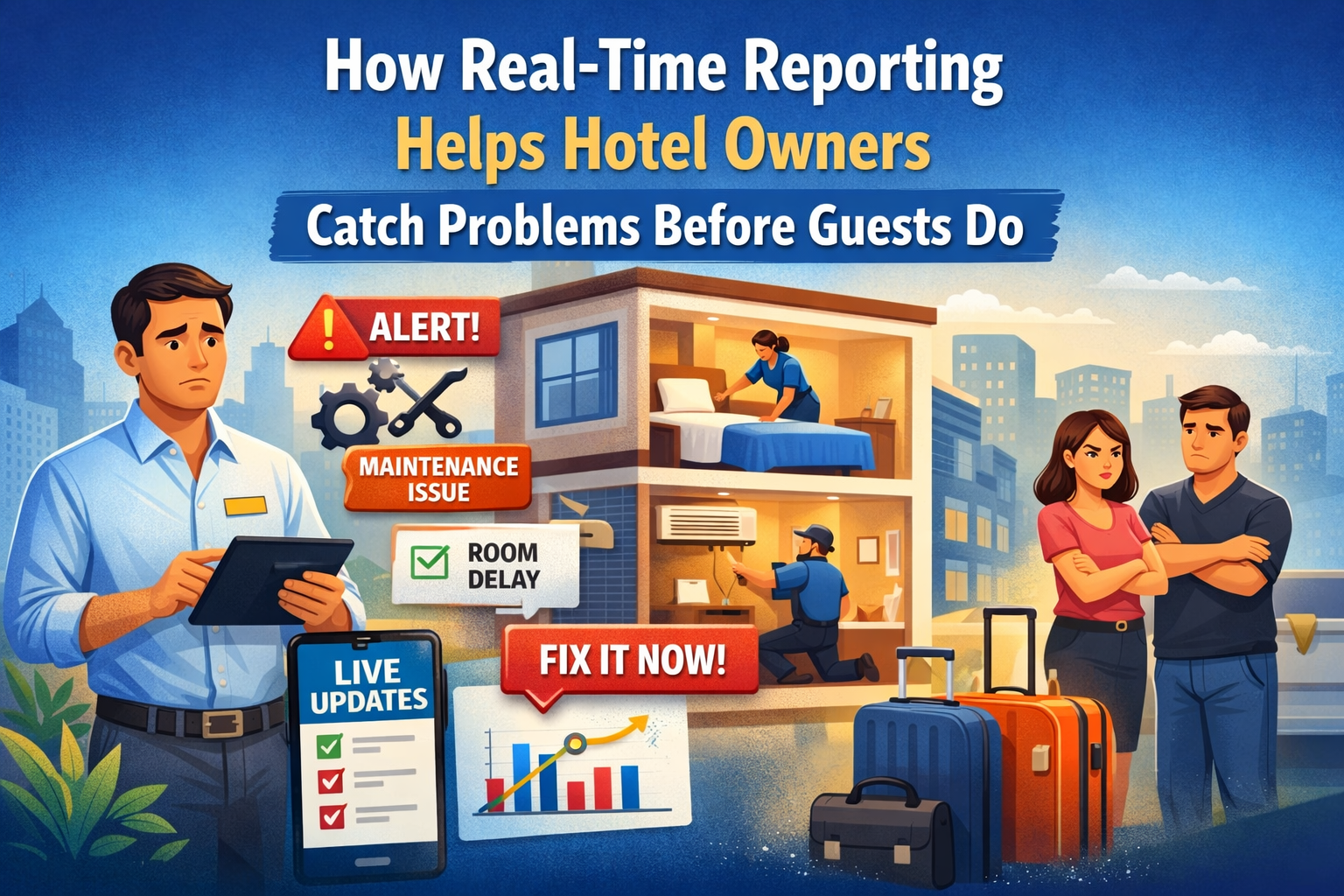
There’s this moment every hotel owner dreads. You probably know it.
A guest walks up to the front desk, a little irritated, maybe trying to stay polite… and says something like, “Hey, the AC in my room isn’t working.”
And right there, you already know—this should’ve been fixed earlier.
The thing is, most hotels in the USA already use some hotel property management system or even advanced hotel operations software. On paper, everything looks… organized. Bookings are tracked, payments logged, and rooms assigned. All neat.
But daily operations? That’s a different story.
And that’s exactly where real-time reporting quietly changes everything.
The Problem Nobody Talks About (Until It’s Too Late)
Hotels don’t usually fail because of one big mistake. It’s the smaller things that miss updates. A housekeeping task that wasn’t marked complete. A maintenance issue that got noted but was not followed up on.
Individually, they seem harmless.
But stack a few of them together, and suddenly:
- Rooms aren’t ready on time
- Guests are waiting longer
- Complaints start building
And honestly, most of these issues aren’t even visible to the owner… not immediately.
Traditional hotel management reporting tools give you reports, sure. But they’re usually delayed. End-of-day. Or worse, end-of-week.
By then? The damage is already done.
Real-Time Reporting Isn’t Just “Faster Reports”
A lot of people think real-time reporting means “getting reports quicker.”
That’s not really it.
It’s more like seeing things while they’re happening. Not after.
Let’s say a room is checked out at 10:05 AM.
In a typical setup :
- Front desk updates status
- Housekeeping gets informed (eventually)
- Cleaning starts whenever someone notices
But with real-time reporting through a mobile hotel management app, something different happens :
- The task is assigned instantly
- Housekeeping gets notified immediately
- Progress is tracked live
So instead of wondering, “Has the room been cleaned yet?” you know.
That small shift—knowing instead of guessing—changes how operations run.
The Invisible Gap Between Data and Reality
Here’s something interesting.
Most hotel property management software is great at storing data. Bookings, guest history, billing… all that.
But it doesn’t really show you what’s happening on the floor, not in detail.
You might see :
- Room assigned
- Maintenance logged
But what you don’t see is:
- Has housekeeping started?
- Is the engineer actually working on the issue?
- Is the task stuck somewhere in between?
That’s the gap.
And real-time hotel operations analytics fills that gap by showing movement, not just status.
Catching Problems Before Guests Notice Them
This is where things get… interesting.
Because the goal isn’t just efficiency, it’s anticipation.
1. Housekeeping Delays (The Silent Killer)
Room turnaround time can quietly ruin the guest experience.
Without real-time tracking :
- A room might sit uncleaned longer than expected
- The front desk assumes it's ready
- Guest checks in… and then waits
With real-time reporting:
- You see which rooms are pending
- You see which staff member is assigned
- You can step in before it becomes a problem
It’s like having a live map of your hotel operations.
2. Maintenance Issues That Linger
Maintenance is tricky.
A guest complains → Issue logged → Engineer assigned
Sounds fine. But then… delays happen.
Without proper hotel maintenance reporting, issues can:
- Get overlooked
- Stay unresolved for hours
- Reappear again and again
With real-time reporting :
- You track how long a task has been open
- You see if it’s been acknowledged
- You get alerts if it’s delayed
So instead of reacting to a guest complaint, you fix it before they even notice.
3. Staff Coordination (Where Most Things Break)
Let’s be honest—most operational issues come down to communication.
Someone didn’t get the update. Or got it late. Or forgot.
Traditional setups rely on:
- Calls
- WhatsApp messages
- Verbal updates
It works… until it doesn’t.
Real-time hotel staff coordination tools centralize everything:
- Tasks are visible to everyone
- Updates happen instantly
- No information gets lost in between
And weirdly enough, that reduces stress for the team too.
What It Looks Like in Real Life
Let me give you a simple scenario.
A mid-sized hotel in the USA—say 80 rooms.
Busy weekend. Almost full occupancy.
At 11:15 AM :
- 20 rooms checked out
- 12 rooms cleaned
- 8 are still pending
Without real-time reporting, the manager might not notice the delay immediately.
But with live hotel operations analytics :
- They see the pending rooms instantly
- They reassign staff
- They prioritize emergency rooms
Result?
Guests check in smoothly. No waiting. No frustration.
And honestly, guests don’t notice smooth operations. They expect it.
Why Traditional PMS Alone Isn’t Enough
Now, this might sound a bit controversial.
But relying only on a PMS hotel management software for operations is like using a spreadsheet to run a kitchen.
It tracks things. But it doesn’t manage movement.
A hotel property management system is essential, no doubt. It handles :
- Reservations
- Billing
- Guest data
But operations? That’s dynamic. Messy. Always changing.
That’s why hotels are slowly pairing PMS with dedicated hotel operations software.
Not replacing it. Just… complementing it.
The Role of Mobile in Real-Time Reporting
This part is easy to underestimate.
But it matters.
Hotel staff aren’t sitting at desks. They’re moving—rooms, floors, hallways.
So if your reporting system is desktop-only… It’s already behind.
A mobile hotel management app allows:
- Instant updates from the floor
- Real-time task completion
- Faster communication
More importantly, it reduces dependency on memory.
No more “I thought someone else handled it.”
Small Signals That Reveal Bigger Problems
One of the underrated benefits of real-time reporting?
Pattern detection.
Over time, you start noticing things like:
- Certain rooms take longer to clean
- Specific maintenance issues keep repeating
- Certain shifts face more delays
These patterns are gold.
Because they help you fix root problems, not just symptoms.
That’s where hotel operations analytics becomes more than just reporting—it becomes decision-making.
Guest Experience Is Built on What They Don’t See
Guests don’t usually think about:
- Task assignments
- Internal communication
- Reporting dashboards
They experience:
- Fast check-in
- Clean rooms
- Quick issue resolution
And all of that depends on how well your backend runs.
There’s this invisible chain between operations and guest satisfaction.
Break it anywhere, and the guest feels it… even if they can’t explain why
A Slight Shift in Mindset
Here’s something I’ve noticed.
Hotels that rely only on traditional hotel management reporting tools tend to be reactive.
Something goes wrong → then they fix it.
Hotels using real-time reporting?
They’re more proactive. Almost preventive.
They catch delays early. Adjust quickly. Stay ahead.
It’s not about being perfect. That’s unrealistic.
It’s about being aware early enough.
So, Is It Worth It?
It depends on how you look at it.
If your hotel runs most of the time smoothly, you might feel like you don’t need it.
But then again, most problems don’t show up until they matter.
Real-time reporting isn’t about adding complexity. It actually reduces it.
Less guessing. Less chasing updates. Less confusion.
More clarity.
And in the business where timing and coordination mean everything, that clarity can quietly make a huge difference.
One Last Thought
Hotel operations are like a backstage crew in a theatre. If everything runs well, nobody notices them. The show feels perfect.
But the moment something slips, everyone notices.
Real-time reporting gives you a way to watch backstage—live, as things happen.
And maybe fix the small things… before they turn into something bigger.
Because once the guest notices, it’s already a little late, isn’t it?