What Is Cloud-Based Hotel Management Software and Why Does It Matter?
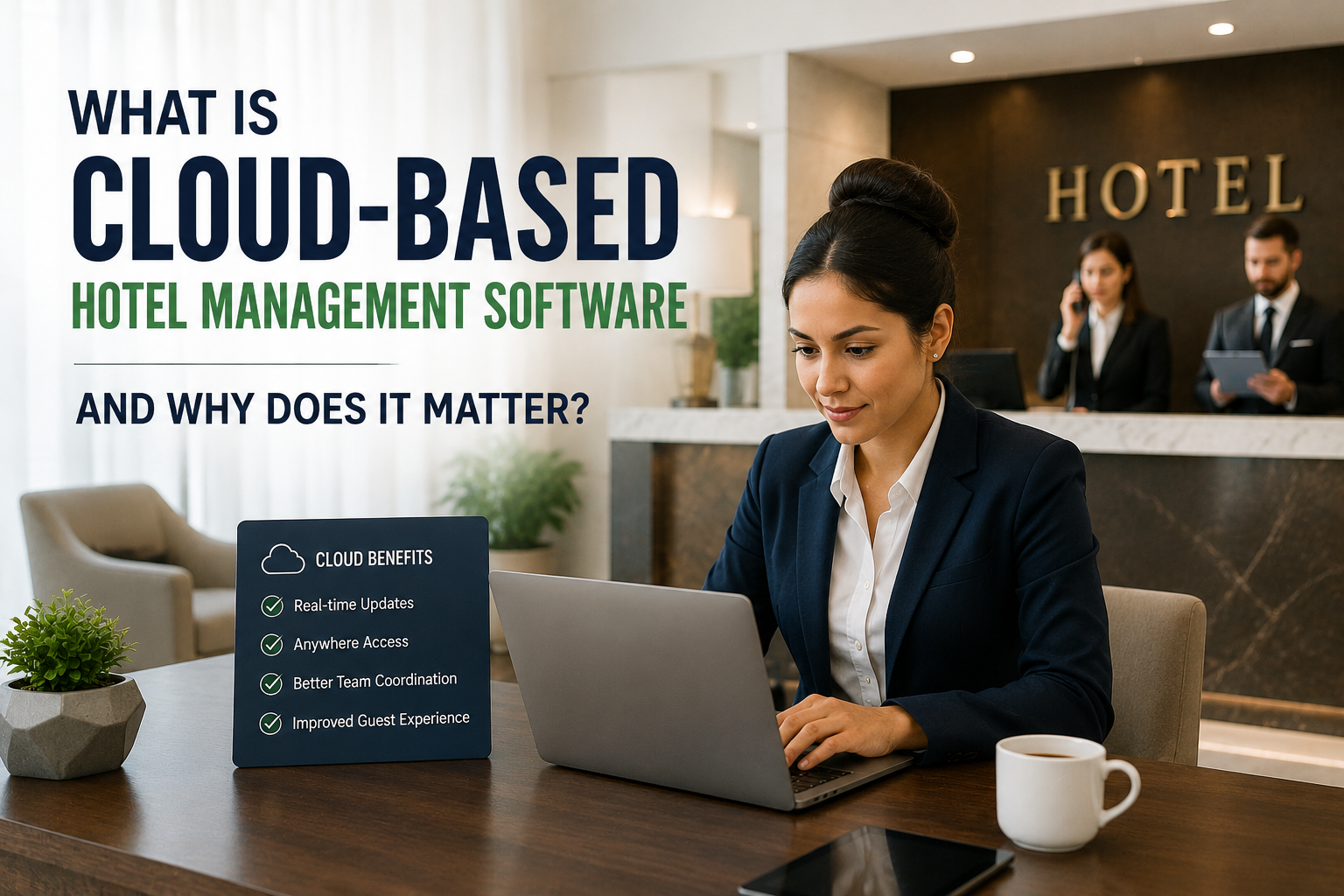
If you’ve been running your hotel on a desktop system that lives on one computer in the back office or worse, on a combination of spreadsheets, paper logs, and group chats, you’ve probably already felt the limitations. Things slip through. The staff is out of sync. You can’t check what’s happening on the property when you’re not physically there. And every time something goes wrong, the root cause is almost always the same: information that should be instantly accessible to everyone is trapped somewhere it can’t be easily reached. This is the exact problem that cloud-based hotel management software was built to solve, and in 2026, it’s no longer a cutting-edge option for forward-thinking hotels. It’s the operational baseline that small and independent properties across the USA need to compete effectively. This blog explains what cloud hotel management system technology actually is, how it works in practice, and why it matters specifically for the kind of hotel you’re running.
What “Cloud-Based” Actually Means in Plain Language
The word “cloud” gets used constantly in technology marketing and means different things in different contexts. In the context of hotel software, it has a specific and practical meaning.
A cloud-based system stores its data and runs its software on remote servers managed by the software provider that are accessible via the internet from any device. This is the opposite of traditional on-premises software, which runs on a specific computer or local server physically located in your hotel.
What this means in practical terms for hotel operators: you can access the system from any smartphone, tablet, or laptop from anywhere with an internet connection. Your front desk agent can check the room status from the front desk. Your housekeeping supervisor can update assignments from a corridor on the third floor. Your maintenance technician can receive task alerts in the basement. You, as the owner or manager, can review operational reports from home, from another property, or from across the country.
The software doesn’t live in your building. It lives on the internet, securely, reliably, and accessible to everyone who needs it, wherever they are.
Cloud vs On-Premises Hotel Software - The Key Differences
Understanding why cloud software matters requires understanding what it’s replacing. For decades, hotel property management system software was sold as on-premises solutions systems installed on a local server or desktop computer in the hotel.
On-premises systems have real limitations that cloud systems don’t share:
Access is tied to a location. If the software is on the front desk computer, only someone at that computer can use it. Housekeeping updates require walking back to the desk. Remote management is essentially impossible.
Updates are manual and costly. When the software needs updating, someone has to install the update physically — sometimes requiring downtime and often requiring IT support. Security patches get delayed. Features don’t improve automatically.
Hardware failure means data loss risk. If the local computer or server fails, the data stored on it may be at risk. Backups are the hotel’s responsibility and are often inconsistently maintained.
Scaling is expensive. Adding another property or another department to the system typically requires additional hardware investment and complex IT configuration.
Hotel cloud software eliminates all of these limitations. Updates happen automatically in the background. Data is backed up continuously and professionally. Access is device-agnostic and location-independent. Adding users, departments, or properties is a software configuration change rather than a hardware investment.
Why Cloud Hotel Software Matters Specifically for Small Hotels
Large chains have historically dominated the conversation about cloud hotel technology — but the benefits are arguably more significant for small and independent hotels than for large properties with dedicated IT teams and infrastructure budgets.
Hotel software for small hotels in the cloud means:
No server to buy, maintain, or replace. For a small property without an IT department, the absence of on-premises hardware is not just a cost saving — it removes an entire category of operational risk and responsibility.
No need for IT help for daily use. Provider controls cloud-based systems. Updates, patches, and management are done without the hotel needing to do anything. There is no need for the front-desk agent to know anything about technology.
Predictable monthly cost that is not expensive. Hotel software used to have expensive initial license fees. With cloud-based systems, you get monthly charges that depend on the size of your business, removing the initial, costly fee that was prohibitive to smaller businesses.
Immediate deployment. Setting up a cloud-based system takes days rather than months — no hardware installation, no complex configuration, no waiting for an IT consultant to schedule a site visit.
The Core Hotel Management System Features That Cloud Enables
Cloud architecture doesn’t just change where the software lives — it enables specific features and capabilities that on-premises systems can’t deliver effectively.
Real-Time Multi-User Access
When every team member — front desk, housekeeping, maintenance, management — is working from the same live system simultaneously, the information delays that cause coordination failures disappear. A housekeeper marks a room complete in the cloud system, and the front desk sees it instantly. A maintenance technician logs an issue, and the supervisor sees it in real time. Everyone works from the same accurate, current information rather than a fragmented collection of notes, messages, and verbal updates.
Remote Management Visibility
This is one of the features that small hotel owners and general managers consistently identify as most impactful. The ability to check operational status — which rooms are clean, which maintenance issues are open, how the current shift is performing — from anywhere, at any time, without calling anyone, fundamentally changes the management experience.
Owners who previously felt they had to be physically present to know what was happening on the property gain genuine freedom. Multi-property operators can monitor several locations from a single dashboard without travelling between them.
Automatic Updates and Continuous Improvement
When a cloud provider improves the system — adding features, fixing issues, improving performance — those improvements are available to all users immediately and automatically. The system you’re using in six months is better than the one you started with, without any action on your part. On-premises systems often go years between major updates because the update process is too costly and disruptive to do frequently.
Enterprise-Grade Security Without Enterprise Cost
Cloud service providers have invested heavily in their security setup – encryption, regular security audits, compliance frameworks — because their entire business depends on keeping client data safe. This level of security investment is far beyond what most individual hotels could implement or maintain independently. Small hotels using reputable cloud systems benefit from enterprise-grade data protection that would be financially impossible to replicate on-premises.
Mobile Hotel Management Software - The Piece That Makes It All Work
Cloud architecture is what makes mobile access possible — but mobile access is what makes cloud hotel software genuinely transformative for hotel operations.
A hotel operations management system that can only be accessed from a desktop computer is still fundamentally a fixed, location-dependent tool. The operational benefits described throughout this blog — real-time housekeeping coordination, instant maintenance alerts, live supervisor visibility — only materialise when the system is accessible on the mobile devices that hotel staff carry with them through the property.
Mobile-first design is the critical distinction between cloud hotel software that genuinely changes daily operations and cloud hotel software that moves a desktop experience to a browser. The best systems are built natively for mobile use — meaning the interface is designed for a smartphone screen, the workflows are optimised for one-handed use while carrying cleaning supplies, and notifications arrive instantly on the device the team member already has in their pocket.
It’s not a minor technical detail. It’s the feature that determines whether housekeeping staff actually use the system to update room status in the moment, or whether they wait to do it later from a fixed terminal — reintroducing the delays that the whole system was supposed to eliminate.
Best Cloud PMS for Small Hotels - What to Actually Look For
Not all cloud hotel management systems are equal, and the marketing language often makes it difficult to distinguish between systems that genuinely deliver for small hotels and those that were built for large chains and scaled down without really changing the design.
Here’s what actually matters for a small hotel evaluating cloud options:
Genuine mobile-first design. Not “mobile compatible”, genuinely built for mobile use from the beginning. Test the system on a smartphone before committing.
No training programme required. If new staff members need hours of training before they can use the system confidently, the design isn’t right for a lean hotel team with high turnover. The best small hotel systems are learnable in under an hour.
Covers operations, not just reservations. Many cloud PMS systems focus on front-of-house functions, reservations, billing, and check-ins. The hotel operations software layer, housekeeping, maintenance, and inventory, are equally important and should be part of the same connected system.
Transparent, scalable pricing. Subscription-based, with pricing that is straightforward and scales logically with the number of users/properties. No surprise charges, no complicated usage-based pricing, which will make costs uncertain.
Fast implementation. Weeks, not months. A small hotel should be fully operational on a new system within days of signing up.
Responsive support. When something goes wrong, or your team has a question, support should be genuinely accessible — not a ticket queue with a multi-day response time.
What Small Hotels Are Gaining by Making the Switch
Hotels across the USA that have moved from manual or on-premises systems to cloud-based operations platforms consistently report the same categories of improvement.
The room turnaround becomes quick since the flow of information about housekeeping is instantaneous and not relayed in telephonic mode. The maintenance problem gets sorted out instantly since the process of reporting and assignment is instantaneous and not telephonic. Coordination amongst the staff becomes easy since everybody works with the same live information and not through disparate means of communication.
And perhaps most importantly for small hotel operators, staff find the work less frustrating. The constant low-grade friction of working with outdated information, unclear task ownership, and slow communication is one of the biggest contributors to staff dissatisfaction in hospitality. Systems that reduce this friction directly contribute to the retention of good team members.
InnCrew is a cloud-based, mobile-first hotel operations companion tool specifically designed for the way small and independent hotel teams work and built natively for mobile. Requires no training programme. Covers housekeeping coordination, maintenance management, inventory tracking, multilingual team support, and actionable reporting — all in one connected platform accessible from any device, anywhere.
FAQ
Q1. What is cloud-based hotel management software?
Cloud-based hotel management software lets hotel teams manage operations, housekeeping, maintenance, and staff tasks online from any internet-connected device.
Q2. What is the difference between cloud hotel software and traditional hotel software?
Cloud software is accessible from anywhere, updates automatically, and requires no local servers. Traditional software runs on on-site systems with limited remote access.
Q3. Is cloud hotel software secure for storing guest data?
Yes. Trusted cloud platforms use encryption, regular backups, and industry-standard security measures to protect guest and operational data.
Q4. Can small hotels afford cloud-based hotel management software?
Yes. Most cloud solutions offer affordable monthly pricing with no expensive hardware or IT infrastructure required.
Q5. Does cloud hotel software work on mobile phones?
Yes. Most modern cloud hotel systems are mobile-friendly, allowing staff to manage tasks and receive updates directly from their smartphones.
Q6. What happens to my hotel data if the internet goes down?
Many cloud platforms support offline functionality for essential tasks and automatically sync data once the internet connection is restored.
Q7. Can I manage multiple hotel properties with cloud hotel software?
Yes. Cloud software lets owners and managers monitor multiple hotel properties from a single dashboard.
Q8. What is the best cloud hotel management software for small hotels in the USA?
The best solution is mobile-first, cloud-based, easy to use, and includes housekeeping, maintenance, staff coordination, and reporting in one platform.